Grammar · 6 min read
Russian Verbs of Motion: Idti vs Khodit, Ekhat vs Ezdit (Finally Made Clear)
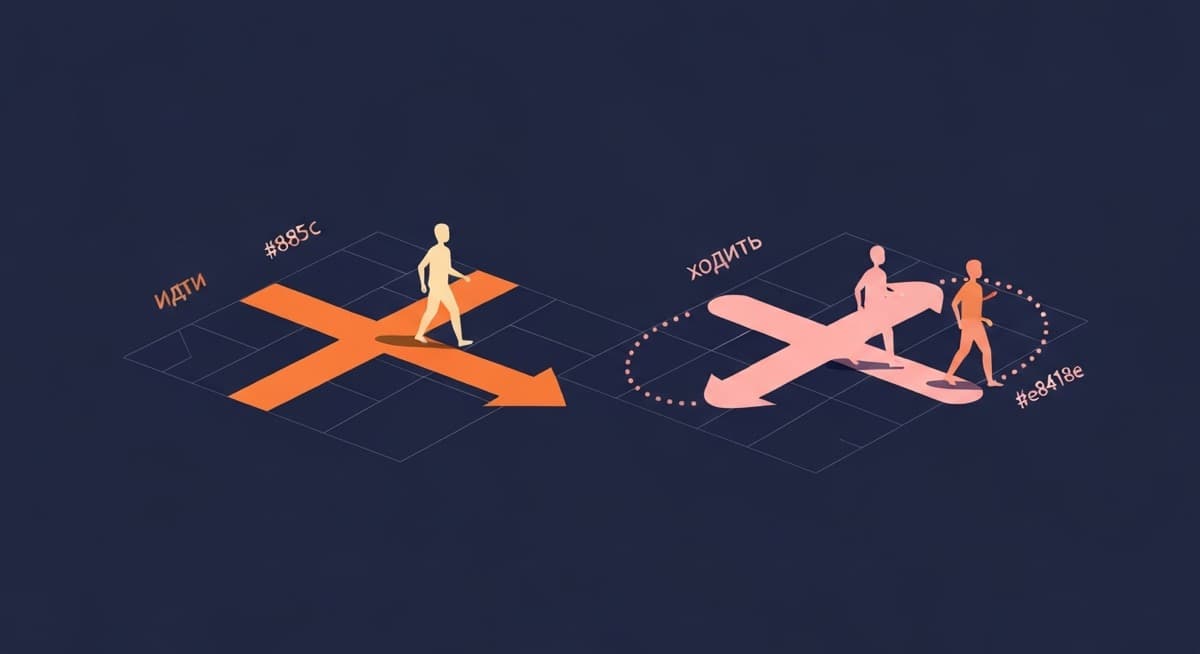
Russian verbs of motion are the thing that makes learners feel like they finally understood Russian, then get confused by it all over again. You learn "to go" and then discover there are four different words for it, and the one you pick changes the meaning completely. Deep breath. Russian verbs of motion are actually one of the most logical parts of the language once you see the pattern, and that is exactly what we are doing here.
The one rule that explains everything
Here is the core idea: Russian splits motion into two types.
One direction, one time uses the verb for a single trip. You are going somewhere right now, in one direction, on one specific journey.
Habitual or repeated movement uses the verb for a pattern. You go somewhere regularly, back and forth, as part of your life.
That is it. Every pair you are about to learn follows this same logic.
Идти vs Ходить: going on foot
| Russian | Pronunciation | English |
|---|---|---|
| Идти | Idti | To go (on foot, one direction, right now) |
| Ходить | Khadit' | To go (on foot, repeatedly or habitually) |
Идти is for a single trip in one direction. You are heading somewhere right now.
| Russian | Pronunciation | English |
|---|---|---|
| Я иду в магазин | Ya idu v magazin | I am going to the shop |
You are walking to the shop right now, in that direction. One trip. That is идти.
Ходить is for something you do regularly, a habit, something you do more than once and return from.
| Russian | Pronunciation | English |
|---|---|---|
| Я хожу в парк каждый день | Ya khazhu v park kazhdyy den' | I go to the park every day |
You go, you come back, you go again. That is the rhythm ходить captures.
The simplest test: ask yourself "am I describing a single trip happening right now, or a pattern of going and returning?" Single trip right now is идти. Pattern is ходить.
Ехать vs Ездить: going by vehicle
The same logic, now for trips by car, train, bus, or plane. Anything where you are not walking.
| Russian | Pronunciation | English |
|---|---|---|
| Ехать | Yekhat' | To go (by vehicle, one direction, right now) |
| Ездить | Yezdit' | To go (by vehicle, repeatedly or habitually) |
Ехать is one trip, happening now, one direction.
| Russian | Pronunciation | English |
|---|---|---|
| Я еду в Москву сейчас | Ya yedu v Maskvu seychas | I am going to Moscow right now |
You are on your way. One trip. Ехать.
Ездить is when you travel somewhere regularly, something you do.
| Russian | Pronunciation | English |
|---|---|---|
| Я езжу в Москву каждую неделю | Ya yezzhu v Maskvu kazhduyu nedelyu | I go to Moscow every week |
Every week you make that trip and come back. That is ездить. As her course book puts it: ехать is used for one-time trips, ездить for habitual or repeated trips.
Side by side: the four verbs
| Verb | Type | When to use |
|---|---|---|
| Идти (idti) | On foot, one direction | Right now, this specific trip |
| Ходить (khadit') | On foot, habitual | Goes and returns, regularly |
| Ехать (yekhat') | By vehicle, one direction | Right now, this specific trip |
| Ездить (yezdit') | By vehicle, habitual | Goes and returns, regularly |
The vertical split is the one that trips people up: on foot (идти, ходить) versus by vehicle (ехать, ездить). The horizontal split is what makes each pair logical: one-time now versus repeated pattern.
Two questions to ask every time
When you need to say "go" in Russian, ask yourself two things in order:
- Am I walking, or am I in a vehicle?
- Is this one specific trip right now, or something I do regularly?
Walking and one trip now is идти. Walking and regularly is ходить. Vehicle and one trip now is ехать. Vehicle and regularly is ездить.
Once those two questions become automatic, the rest is just practice.
Real examples to test yourself
Try reading these and see if the choice makes sense before looking at the explanation.
| Russian | Pronunciation | English |
|---|---|---|
| Он идёт домой | On idyot damoy | He is going home (right now, on foot) |
One trip, walking, happening now. Идти.
| Russian | Pronunciation | English |
|---|---|---|
| Мы ездим на море каждое лето | My yezdim na more kazhdoye leto | We go to the sea every summer |
Repeated, seasonal, by vehicle. Ездить.
| Russian | Pronunciation | English |
|---|---|---|
| Я еду на работу | Ya yedu na rabotu | I am going to work (right now, by vehicle) |
Single trip, vehicle, this moment. Ехать.
| Russian | Pronunciation | English |
|---|---|---|
| Она ходит в спортзал три раза в неделю | Ana khodit v sportzal tri raza v nedelyu | She goes to the gym three times a week |
Regular habit, on foot. Ходить.
Why Russian has these pairs (the short version)
Russian motion verbs carry direction built into them. When something is genuinely directional and you are on your way, you need a word that signals that. When you are talking about a pattern, a habit, or movement without a fixed single direction, a different word signals that. The language is being very precise about something English just leaves vague.
It can feel like extra work at first. But once the distinction is natural, you find it actually makes communication cleaner. "I go to Moscow" in English leaves open whether that means right now or every month. In Russian, ехать versus ездить tells the listener immediately.
A note on other verbs of motion
Russian has more motion verb pairs beyond these four: flying gives you лететь (letet') for one trip right now and летать (letat') for flying regularly, and there are others too. They all follow exactly the same one-direction-now versus habitual-repeated logic. Once you have идти, ходить and ехать, ездить solid, the others fall into place because the pattern is always the same.
Keep the Free Grammar Cheat Sheet handy while you are building this into muscle memory. It is a free download you can keep beside you while you practise.
The short version
Russian verbs of motion come in pairs: one for a single trip in one direction, one for habitual or repeated travel. Идти and ехать are the "right now, heading there" words. Ходить and ездить are the "I do this regularly" words. Walking versus vehicle tells you which pair. The two questions to ask every time: am I walking or in a vehicle, and is this one trip or a pattern? Answer those and you have the right verb.
If you want to build your grammar one piece at a time without memorizing tables, the Simple Russian e-book takes you through exactly this kind of usage-first approach from the very beginning.