Grammar · 6 min read
Russian Noun Gender: How to Tell If a Word Is Masculine, Feminine, or Neuter
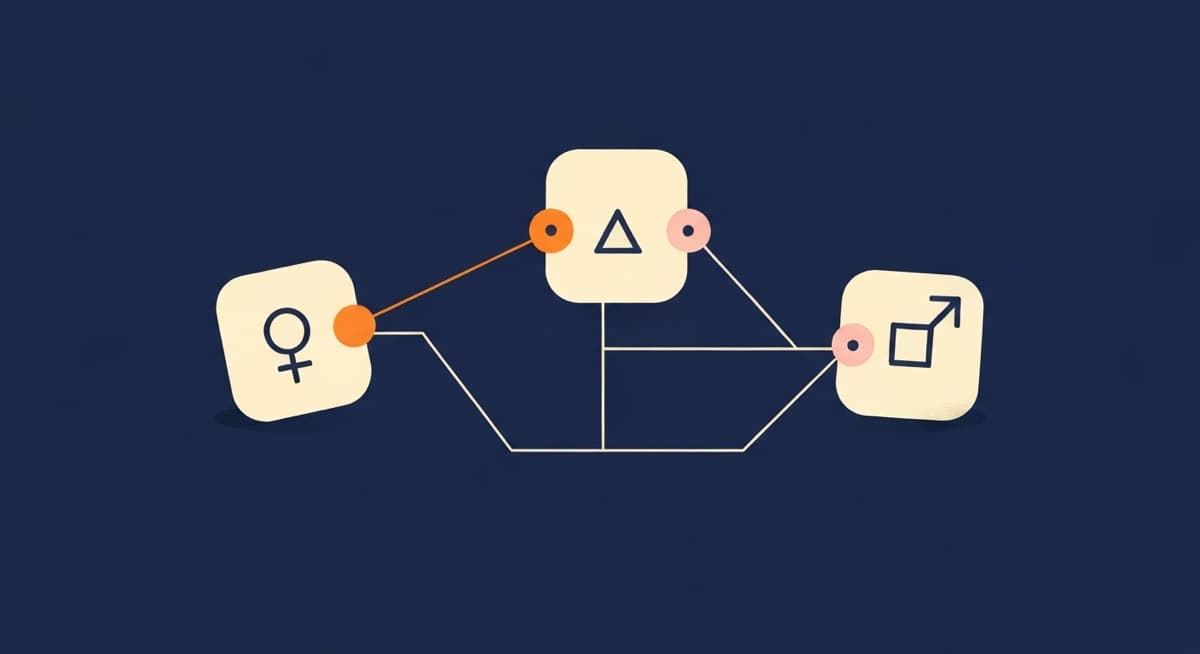
Russian noun gender trips up almost every English speaker, and I understand why. In English, things just exist. A table is a table, food is food. In Russian, every single noun is masculine, feminine, or neuter, and the word itself usually tells you which one. Once you see that, russian noun gender stops being something you memorise word by word and becomes something you can read straight from the ending.
Let me show you how it works.
Why gender matters in Russian
Gender is not just a label we stick on a word. It changes the endings on the words around the noun, like adjectives. So the word for "good" or "beautiful" actually shifts depending on the gender of the noun it describes.
The good news: you do not need to handle all of that today. Start by learning to spot the gender from the ending. Everything else in Russian grammar builds on top of that one skill, so it is the right place to begin.
The three genders and how to spot them
Here is the core rule, straight from Lesson 1 of the book:
Masculine nouns end in a consonant (any letter that is not a vowel).
Feminine nouns end in -а or -я.
Neuter nouns end in -о or -е.
That is it. Three endings, three genders. Look at the last letter of the Russian word and you have your answer most of the time.
See it in action: a word you already know
One of the clearest examples from the book is еда (yeda) - the Russian word for "food." It ends in -а, so it is feminine. You are not guessing here. You are reading the ending and letting it tell you.
Here is the same pattern across a few everyday words:
| Russian | Pronunciation | English |
|---|---|---|
| Еда | Yeda | Food |
| Вода | Vada | Water |
| Паспорт | Paspart | Passport |
| Город | Gorad | City |
| Утро | Utra | Morning |
| Кафе | Kafe | Café |
Еда and вода are feminine (they end in -а). Паспорт and город are masculine (they end in a consonant). Утро is neuter (-о) and кафе is neuter (-е). Same simple rule, every time.
Masculine: ends in a consonant
A masculine noun ends in a consonant, with no vowel at the end.
| Russian | Pronunciation | English |
|---|---|---|
| Город | Gorad | City |
| Паспорт | Paspart | Passport |
| Стол | Stol | Table |
| Хлеб | Khleb | Bread |
Город (gorad - city) is worth a closer look. The unstressed о sounds like "a" when you say it out loud, which is why I write it gorad and not "gorod." That is how Russian actually sounds, not a typo. The word still ends in the consonant д, so it is masculine.
Feminine: ends in -а or -я
Both -а and -я signal feminine. Here are some you will use constantly:
| Russian | Pronunciation | English |
|---|---|---|
| Еда | Yeda | Food |
| Вода | Vada | Water |
| Москва | Maskva | Moscow |
| Семья | Sem'ya | Family |
Москва (Maskva) ends in -а, so it is feminine. A handy side effect: most Russian city names that end in -а or -я are feminine too, which is useful once you start reading maps, signs, and tickets.
Neuter: ends in -о or -е
Neuter nouns end in -о or -е. These are often things or places:
| Russian | Pronunciation | English |
|---|---|---|
| Утро | Utra | Morning |
| Кафе | Kafe | Café |
| Место | Mesta | Place |
| Море | Morye | Sea |
You already know утро (utra - morning) from the greeting Доброе утро (Dobraye utra - good morning). And here is a small bonus: that "доброе" form is the neuter version of the adjective, agreeing with the neuter noun утро. So you have been using gender agreement without even noticing, which means you are already further along than you think.
Plurals: the patterns and the exceptions that come up early
Once you know the gender, plurals follow a pattern. But Russian has a handful of very common words that break the regular rule, and you meet them early, so it is worth learning them as fixed words now.
These four come straight from the book (p18-20):
| Singular | Pronunciation | English | Plural | Pronunciation |
|---|---|---|---|---|
| Друг | Drug | Friend | Друзья | Druz'ya |
| Брат | Brat | Brother | Братья | Brat'ya |
| Город | Gorad | City | Города | Garada |
| Дом | Dom | House | Дома | Dama |
Друзья (druz'ya - friends) and братья (brat'ya - brothers) look nothing like their singular forms, so learn them as their own words rather than trying to derive them. They come up far too often to leave to guesswork.
Города (garada - cities) and дома (dama - houses) stay closer to the singular, but the stress shifts onto the ending. Knowing this early saves you confusion later.
One honest caveat: soft sign nouns
You will eventually meet nouns that end in ь (the soft sign). These are trickier, because a soft sign noun can be either masculine or feminine, and the ending alone does not tell you which. Ночь (noch' - night) is feminine. День (den' - day) is masculine.
For soft sign nouns, just learn the gender together with the word. But do not let this slow you down right now. The consonant / -а / -о rule covers the large majority of words you meet as a beginner. The soft sign is a later chapter, not a wall you have to climb today.
The short version
Russian noun gender is readable from the last letter of the word:
- Ends in a consonant = masculine
- Ends in -а or -я = feminine
- Ends in -о or -е = neuter
- Ends in ь = learn the gender with the word
That is the whole foundation. Once it clicks, a big chunk of Russian grammar starts to make sense, because adjective endings and case endings all follow gender. Start with еда (yeda - food, feminine) and город (gorad - city, masculine). Two words, two genders, and the rule already feels real.
The free grammar cheat sheet pulls the key ending patterns into one page. Keep it open while you practise, and spotting gender becomes automatic faster than you would expect. And when you are ready to build real vocabulary around these patterns, the Simple Russian e-book is made for exactly this starting level.