Getting Started · 7 min read
How Long Does It Take to Learn Russian? A Realistic Timeline for Beginners
How long does it take to learn Russian? It is probably the first question anyone asks before they start, and I am going to give you an honest answer, not a motivational poster. The short version: it depends on what you mean by "learn", how often you study, and what method you use. The longer version is below, with real examples from real students.
What does "learn Russian" actually mean?
This is where most timelines go wrong. "Learn Russian" can mean:
- Reading a menu in a Moscow cafe
- Following a conversation at your partner's family dinner
- Holding a full conversation on any topic
- Being mistaken for a native speaker
These are very different goals, and they take very different amounts of time. Before you panic about years of study, figure out which one actually matters to you.
For most people reading this, the honest goal is: hold a real conversation with the Russians in my life, understand what is being said around me, and not feel lost. That is absolutely achievable. And it is not as far away as you think.
Real timelines from real students
Let me show you two real examples from my own students, not invented numbers.
Jim from Scotland came to me after working with two or three other teachers without real progress. He had a specific reason to learn: before covid he had a job interview at a school in Moscow. Then covid happened, the job disappeared, but the Russian stayed. After one year and six months of lessons with me, Jim can hold a full Russian conversation. He even did it on camera. His grammar is not perfect, he admits that himself, but he speaks, he connects, he communicates.
One of my students was catching words on the radio after three months of four lessons a week. Not fluent. Not even close to fluent. But already understanding real Russian in the wild, which felt enormous.
One of the dialogues in my book is honest about this too: a character says Russian is "very hard, needs minimum three years." And you know what? That person is not wrong if we are talking about deep fluency. But three years of what? Three years of drilling grammar tables alone will not get you there. Three years of speaking, listening, and building real sentences? You will surprise yourself.
First phrases: what you can say in the first weeks
Before we get to the full timeline, here are the very first phrases most students feel comfortable with almost immediately. The spellings match my transcription guide, written the way the words actually sound.
| Russian | Pronunciation | English |
|---|---|---|
| Привет | Privet | Hi |
| Спасибо | Spasiba | Thank you |
| Меня зовут... | Menya zavut... | My name is... |
| До свидания | Da svidaniya | Goodbye |
These come faster than people expect. A simple self-introduction is usually comfortable within the first month. The alphabet is the only real barrier at the start, and most students get past it in a week or two.
A practical timeline by goal
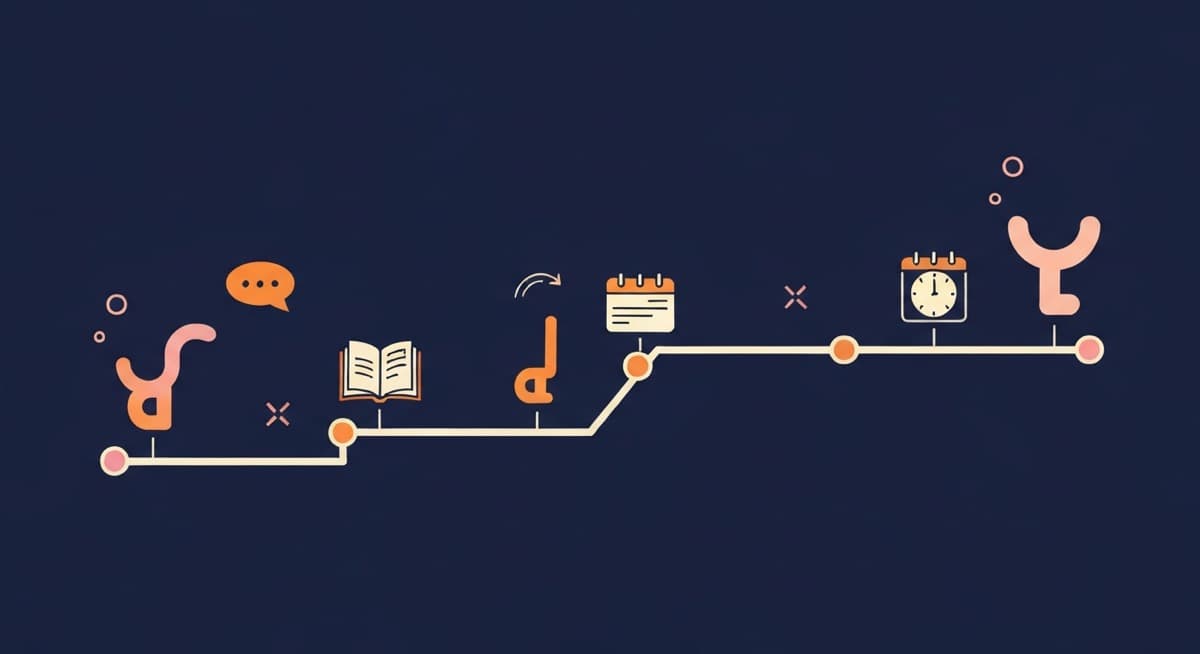
Here is what is realistic, assuming you study consistently (three to five sessions a week, around 30 to 45 minutes each):
0 to 3 months: you can read, introduce yourself, and catch familiar words
This is the foundation stage. You learn the Cyrillic alphabet (faster than you think, most people get comfortable in a week or two), you pick up greetings and basic phrases, and you start building your first sentences. After three months of real practice you will start catching words in Russian conversations or on the radio. It does not sound like much, but it is the stage that makes everything else possible.
3 to 12 months: you can have simple real conversations
This is where it gets fun. You can order food, introduce people, talk about your day, ask questions, answer questions. Your grammar will not be perfect and that is fine. Russians will understand you and will appreciate that you are trying. At around six months you will have moments where a short exchange just flows, and those moments are addictive.
1 to 2 years: you can hold a proper conversation on topics that matter to you
This is Jim's range. He spent a year and a half with me and now speaks Russian comfortably. You will still make mistakes. You will still struggle with some grammar. But you can be in a room with Russian speakers and participate, not just nod and smile. For most people this is the real goal, and it is reachable.
3 years and beyond: deep fluency
For reading books, watching films without subtitles, handling complex or fast speech, you are looking at three or more years. This is not discouraging, it is just honest. But deep fluency is also not what most beginners actually need.
The one thing that matters more than time
How you study matters more than how long you study. I have seen students grind grammar for a year and still freeze up when someone speaks to them. I have also seen students who started speaking basic Russian out loud from week two, made a hundred mistakes, and had real conversations within eight months.
The difference: speaking first, not last. Reading the Latin transcription so you can pronounce words before you have mastered the Cyrillic. Understanding why a case is used before you memorise its endings. No grammar wall at the start. These are the things that actually move the needle.
One practical thing you can do today: learn to read Cyrillic. It takes an afternoon for most people, and it unlocks everything else. My free Cyrillic guide walks you through it step by step.
The "Russian is impossible" myth
I hear this a lot and I want to address it directly. Yes, Russian has cases. Yes, the grammar is more complex than Spanish. But here is what I tell my students: people will understand you even when you get things wrong. The goal is connection, not perfection.
Jim does not have perfect grammar. The student who was catching radio words after three months was not conjugating everything correctly. But they were communicating, and that is what matters. Russian people appreciate the effort enormously. A foreigner who tries, even imperfectly, gets warmth in return.
Where to start right now
If you have not started yet, here is the clearest possible first step: learn to read Cyrillic. Not because you need to be fluent in it before speaking, but because having even a basic relationship with the alphabet makes every next step easier. You can pick up a word, see how it is spelled, hear how it sounds, and it starts to stick.
My free Cyrillic guide walks you through the whole alphabet in one session. Download it here. No overwhelm, no grammar tables, just the letters and how to read them.
Once you have the alphabet, the Simple Russian e-book is the next step: real vocabulary, real phrases, and the cases explained in plain language so they actually make sense.
The short version
How long does it take to learn Russian? Here is the honest answer:
- A few weeks to read the alphabet and say your first phrases
- Three to six months to start catching words and having simple exchanges
- One to two years to hold real conversations on topics that matter to you
- Three or more years for deep fluency
None of that requires a gift for languages. It requires showing up regularly, speaking early, and not waiting until your grammar is perfect to open your mouth. Jim from Scotland did it. The student catching radio words did it. You can too.