Relationships & Culture · 6 min read
Do Russians Kiss on the Cheek to Say Hello? Greeting Culture Decoded
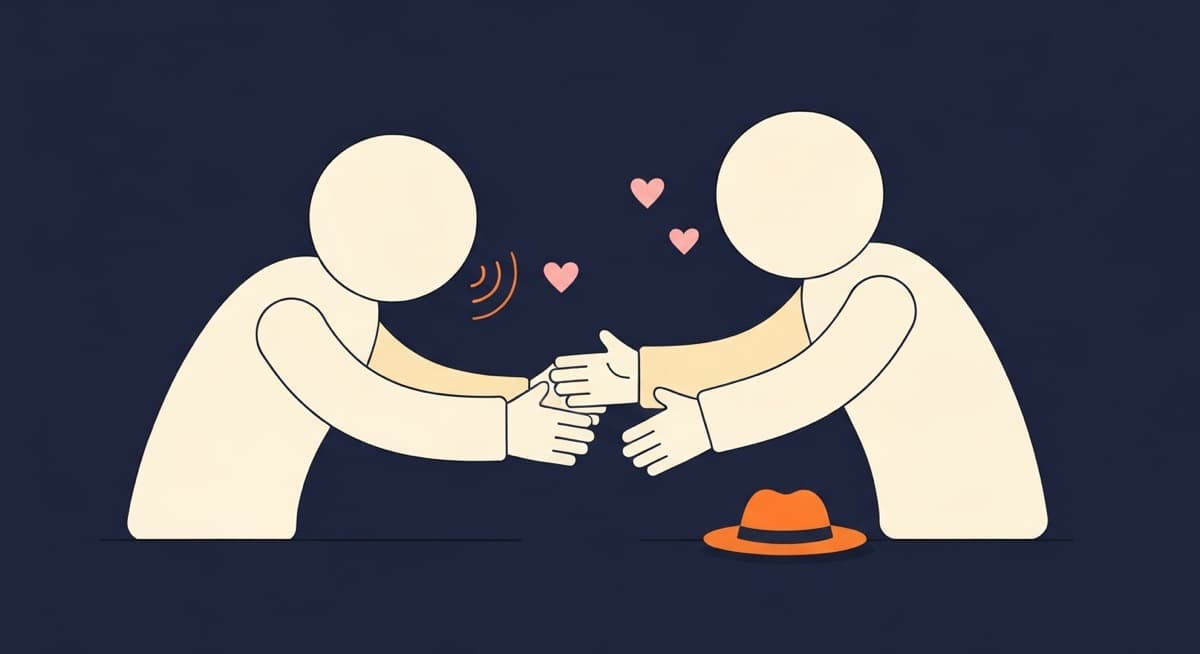
Russian kissing culture confuses a lot of people the first time they visit a Russian family. You are not sure if you lean in, shake hands, or just stand there awkwardly. And then someone's aunt hugs you like she has known you for twenty years and you wonder how that happened when you only just arrived. This article decodes the real rules behind how Russians greet each other physically - who kisses whom, when, and what it actually means.
The short answer: it depends on closeness, not country
Russians do kiss on the cheek to greet people, but not everyone and not always. The deciding factor is not gender or age - it is closeness. Among close friends, relatives, and people who have known each other for years, cheek kisses and hugs are a very natural, warm greeting. With strangers or in formal settings, a firm handshake is much more typical.
So if you are about to meet your partner's family and wondering what to expect: the answer is "it depends on how they see you." A handshake on the first visit is completely normal. A hug and cheek kiss on the second visit is a good sign.
Strangers: why Russians do not say hi on the street
This is the part that surprises most Westerners. In general, Russians do not greet strangers on the street. Public interactions with people you do not know tend to be more reserved and private compared to many other cultures.
It is not rudeness. It is not coldness. It is just not in the culture. Russians typically maintain a level of privacy when out in public, and small talk with strangers is not a common habit. If a stranger says hello on the street, the reaction is more likely to be curiosity than warmth - "why is this person I do not know talking to me?"
This matters because it explains the whole logic of Russian greeting culture. Physical warmth - the hug, the cheek kiss - is something you earn by being close, not something distributed casually to everyone. When you do get it, it means something.
Formal settings: the handshake rules
In business meetings and formal situations, a firm handshake is the standard greeting in Russia. Men shake hands with each other. Women may shake hands, or they may greet with a kiss on the cheek - both are accepted.
If you are meeting someone's parents for the first time, a firm handshake and a respectful Zdravstvuite (Здравствуйте) is exactly right. Do not go in for a hug on the first meeting - that reads as presumptuous. Let them lead.
| Russian | Pronunciation | English |
|---|---|---|
| Здравствуйте | Zdravstvuite | Hello (formal) |
| Привет | Privet | Hi (informal) |
| Очень приятно | Ochen' priyatna | Very nice to meet you |
| Рада познакомиться | Rada paznakomitsa | Happy to meet you (said by a woman) |
A note on the handshake itself: a firm handshake is the common, respectful greeting gesture in Russia, especially in formal or business meetings. Firm and direct is the right read for the setting.
Close friends and family: where the warmth lives
This is where Russian greeting culture opens up completely. Among close friends, relatives, and acquaintances, greeting each other with a hug or a kiss on the cheek is very common. Women can greet both men and women this way. Men usually reserve cheek kissing for close female friends or female relatives.
And the cheek kiss is genuinely warm - not a formal air-kiss, but a real moment of connection between people who are happy to see each other.
What it means when you get the hug
If you are visiting a Russian family and the mother greets you with a hug and a cheek kiss on a second or third visit, pay attention to that. It is not just a greeting gesture - it is a signal. In a culture where physical warmth is reserved for people who are already close, being pulled into that circle is meaningful. It means she has decided you are good.
The opposite is also true. If someone consistently keeps the handshake and never warms up to a hug, they have not fully decided yet. It is not necessarily negative - just not yet open. Be patient. Russians tend to be more reserved with people they do not know well, and more genuinely warm with people they trust.
The hat detail (old-fashioned but still noticed)
One small etiquette point from Liza: if you are wearing a hat when entering someone's home or a business meeting, remove it. This is a formal gesture that shows respect. It is not something every Russian does daily, but in the right setting - especially with an older generation - it is noticed and appreciated.
Reading the room: a practical guide
You do not need to overthink this. Here is the simple version:
First time meeting partner's parents: firm handshake, Zdravstvuite, no hug. Let them lead on everything physical.
Second or third visit, parents are warming up: if the mother opens her arms, go in for the hug. If the father extends his hand again, that is still the right greeting and that is fine.
With younger siblings or cousins your age: Privet, a casual handshake or hug depending on what they do, ты (ty) is normal.
With close friends of your partner who already know you exist: they will almost certainly hug you. Lean in, it is genuine.
In a business or formal setting with Russians you are meeting for work: handshake, Zdravstvuite, formal register throughout.
The language side: say something when you greet
The physical greeting and the words always go together. Even a simple Zdravstvuite while extending your hand is a full, respectful greeting. If you can add Ochen' priyatna (very nice to meet you) after, you will stand out in the best way.
| Russian | Pronunciation | English |
|---|---|---|
| Здравствуйте | Zdravstvuite | Hello (formal) |
| Привет | Privet | Hi (informal) |
| Меня зовут... | Menya zavut... | My name is... |
| Очень приятно | Ochen' priyatna | Very nice to meet you |
| До свидания | Da svidaniya | Goodbye (formal) |
| Пока | Paka | Bye (informal) |
If you want the full greetings toolkit - formal, informal, time-of-day, goodbyes, and the ty/vy choice - grab the free greetings guide. It is a quick reference you can have on your phone before the visit.
The bottom line
Russian kissing culture is not complicated once you understand the logic behind it: warmth is earned, not distributed to everyone. Strangers get privacy and distance. Formal settings get handshakes. Close friends and family get hugs and cheek kisses.
When you get pulled into that inner circle - when the handshake becomes a hug - it is one of the nicer things that can happen. It means you are no longer a guest. You are someone they know.