Words & Vocabulary · 9 min read
100 Most Common Russian Words for Beginners (the Ones Worth Learning First)
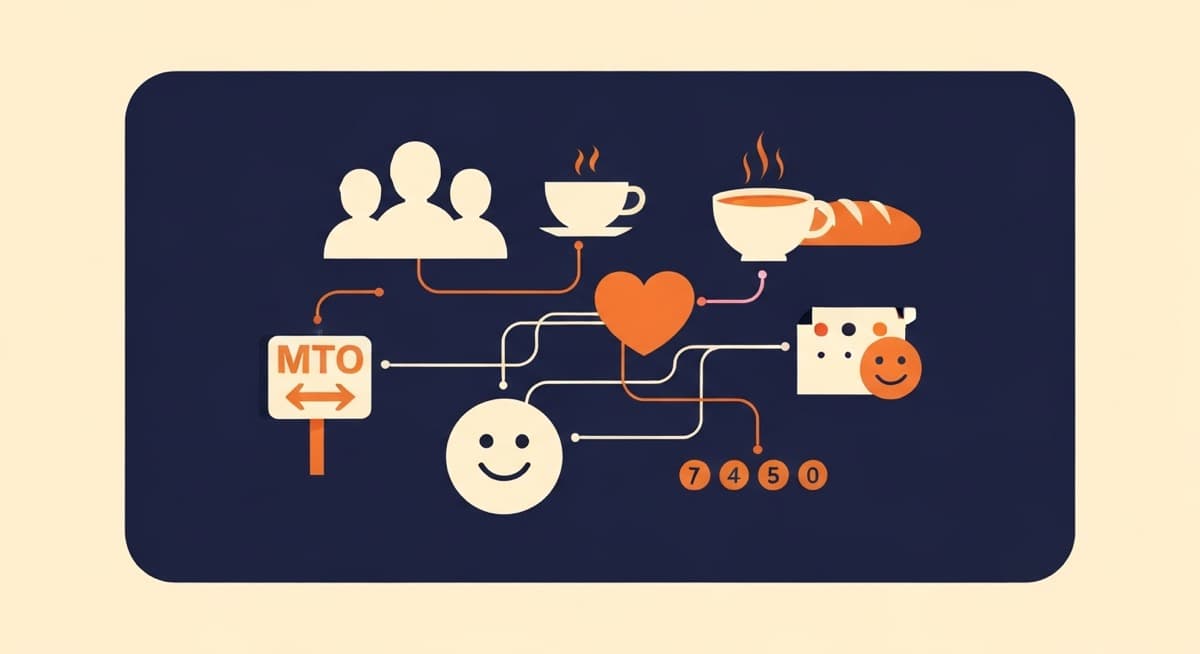
The most common Russian words are not random. They cluster around a handful of topics: the people in your life, how you greet them, what you eat, how you get around, and how you feel. Learn those clusters and you have covered the vocabulary you will actually use in the first six months. That is what this list is built around.
A note before we start: Russian pronunciation follows a phonetic system (mostly), but stressed and unstressed vowels sound different. The letter О, for example, sounds like "A" when it is unstressed. Спасибо is not "spasibo" - it is spasiba. All the pronunciations below follow that real-sound system, the way I say them.
If you want the full 1,000-word set organised by theme, that is the Simple Russian Dictionary - it covers ten topics with Cyrillic, pronunciation, and English for every word, which is exactly the format below but at much greater depth.
People and relationships
These are the words you use to talk about the people around you. They come up in the very first lesson because you cannot describe your life without them.
| Russian | Pronunciation | English |
|---|---|---|
| человек | chelavyek | person / man |
| мама | mama | mum / mom |
| папа | papa | dad |
| семья | sem'ya | family |
| друг | druk | friend (male) |
| подруга | padruga | friend (female) |
| муж | muzh | husband |
| жена | zhena | wife |
| сын | syn | son |
| дочь | doch' | daughter |
| брат | brat | brother |
| сестра | syestra | sister |
| дедушка | dyedushka | grandfather |
| бабушка | babushka | grandmother |
| родители | raditeli | parents |
The word человек is worth learning early because it also means "person" in a general sense, not just "man". And дедушка and бабушка - even people who have never studied Russian often know бабушка already.
Greetings and everyday conversation
You will say these words every single day. They are the first things you put in your mouth in Russian.
| Russian | Pronunciation | English |
|---|---|---|
| Привет | Privet | Hi (informal) |
| Здравствуйте | Zdravstvuite | Hello (formal) |
| Пока | Paka | Bye |
| До свидания | Da svidaniya | Goodbye (formal) |
| Спасибо | Spasiba | Thank you |
| Пожалуйста | Pazhalusta | Please / You're welcome |
| Да | Da | Yes |
| Нет | Nyet | No |
| Меня зовут | Menya zavut | My name is |
| Как тебя зовут? | Kak tebya zavut? | What is your name? (informal) |
| Хорошо | Kharasho | Good / Fine |
| Нормально | Narmal'na | Normal / Fine (a real positive answer) |
| Отлично | Atlichna | Excellent |
| Очень приятно | Ochen' priyatna | Nice to meet you |
| Извините | Izvinite | Excuse me / Sorry (formal) |
One small thing worth knowing about нормально: in English, saying "normal" can sound flat or dismissive. In Russian it is a genuine, warm answer to "how are you?" - closer to "all good" than "meh". Do not be surprised when Russians say it with a smile.
Essential verbs
Verbs unlock sentences. These are the ones that give you the most coverage fastest.
| Russian | Pronunciation | English |
|---|---|---|
| быть | byt' | to be |
| иметь | imet' | to have |
| говорить | gavarit' | to speak / to say |
| понимать | panimat' | to understand |
| знать | znat' | to know |
| хотеть | khatet' | to want |
| идти | idti | to go (on foot, one trip) |
| ехать | yekhat' | to go (by transport, one trip) |
| есть | yest' | to eat |
| пить | pit' | to drink |
| делать | delat' | to do / to make |
| читать | chitat' | to read |
| писать | pisat' | to write |
| слушать | slushat' | to listen |
| помогать | pamagat' | to help |
A helpful feature of Russian: there is no present-tense form of "to be." You do not say "I am a student" - you say "Я студент" (Ya student). Two words, no linking verb needed. That makes your first sentences surprisingly simple to build.
Food and drink
Food vocabulary is practical and motivating. It gives you something to say at a restaurant, at your partner's family table, and when someone asks you what you want.
| Russian | Pronunciation | English |
|---|---|---|
| еда | yeda | food |
| вода | vada | water |
| хлеб | khleb | bread |
| мясо | myasa | meat |
| рыба | ryba | fish |
| суп | sup | soup |
| салат | salat | salad |
| чай | chai | tea |
| кофе | kofe | coffee |
| молоко | malako | milk |
| сок | sok | juice |
| завтрак | zavtrak | breakfast |
| обед | abed | lunch |
| ужин | uzhin | dinner |
| вкусно | vkusna | delicious / tasty |
Молоко is a good example of the unstressed О rule in action: the word is written with three O's but they all reduce to А in real speech, giving you malako, not moloko. Once you hear that, so much else clicks.
Getting around
These words cover the basics of navigating a city, asking for directions, and using transport.
| Russian | Pronunciation | English |
|---|---|---|
| метро | metro | metro / underground |
| такси | taksi | taxi |
| остановка | astanovka | stop (bus / tram) |
| город | gorad | city |
| улица | ulitsa | street |
| дом | dom | house / building |
| отель | atel' | hotel |
| аптека | apteka | pharmacy |
| музей | muzei | museum |
| кафе | kafe | cafe |
| где | gdye | where |
| как | kak | how |
| далеко | dalyeko | far |
| близко | blizka | close / nearby |
| налево | naleva | to the left |
| направо | naprava | to the right |
| прямо | pryama | straight ahead |
Где and как are small words that do a lot of work. Где метро? (Where is the metro?), Как тебя зовут? (What is your name?) - two words each, completely usable from day one.
Feelings and states
Knowing how to say how you feel - and how to ask someone else - builds connection fast. These words are simple and emotionally useful.
| Russian | Pronunciation | English |
|---|---|---|
| люблю | lyublyu | I love (first person) |
| нравится | nravitsa | I like / it pleases me |
| хочу | khachu | I want |
| устал / устала | ustal / ustala | tired (male / female) |
| рад / рада | rad / rada | glad / happy (male / female) |
| грустно | grustna | sad |
| страшно | strashna | scary / frightening |
| скучно | skuchna | boring / I'm bored |
| интересно | interesna | interesting |
| больно | bol'na | it hurts / painful |
| хорошо | kharasho | good / well |
| плохо | ploha | bad |
| холодно | kholadna | cold |
| жарко | zharka | hot |
| всё | vsyo | everything / that's all |
A note on люблю vs нравится: these are not interchangeable. Я тебя люблю (I love you) carries real weight and is said seriously between people who mean it. Мне нравится (I like it) is lighter - closer to "I enjoy this" or "this appeals to me." Using люблю too casually is like saying "I love you" to a barista on a first meeting.
Numbers 1 to 10
You cannot get far without numbers - for prices, times, addresses, and counting anything.
| Russian | Pronunciation | English |
|---|---|---|
| один / одна | adin / adna | one (masc / fem) |
| два / две | dva / dve | two (masc / fem) |
| три | tri | three |
| четыре | chetyre | four |
| пять | pyat' | five |
| шесть | shest' | six |
| семь | sem' | seven |
| восемь | vosem' | eight |
| девять | dyevyat' | nine |
| десять | dyesyat' | ten |
Russian numbers do something that surprises most beginners: the noun after a number changes form. After один/одна, the noun stays in its basic form. After два/три/четыре, it shifts. After пять and above, it shifts again. You do not need to master that on day one, but it is good to know it exists so you are not confused when you hear it.
A simple way to use this list
Do not try to learn all 100 words at once. Pick one theme that matches your real life right now. If you are visiting your partner's family soon, start with greetings and the people words. If you are travelling to a Russian-speaking city, start with getting around and food. The words you use stick faster than the words you drill in the abstract.
The Beginner Starter Pack gives you a structured way to start speaking from day one - no Cyrillic wall, no grammar tables, just real phrases you can use. Grab it free.
Once you have the first hundred words feeling comfortable, the Simple Russian Dictionary takes you through 1,000 words across ten themes in the same three-column format you see here: Cyrillic, pronunciation, English. It is the natural next step for building a vocabulary that actually holds up in real conversation.